 Routing Zhang
Behind the Paper
Growth & Gratitude
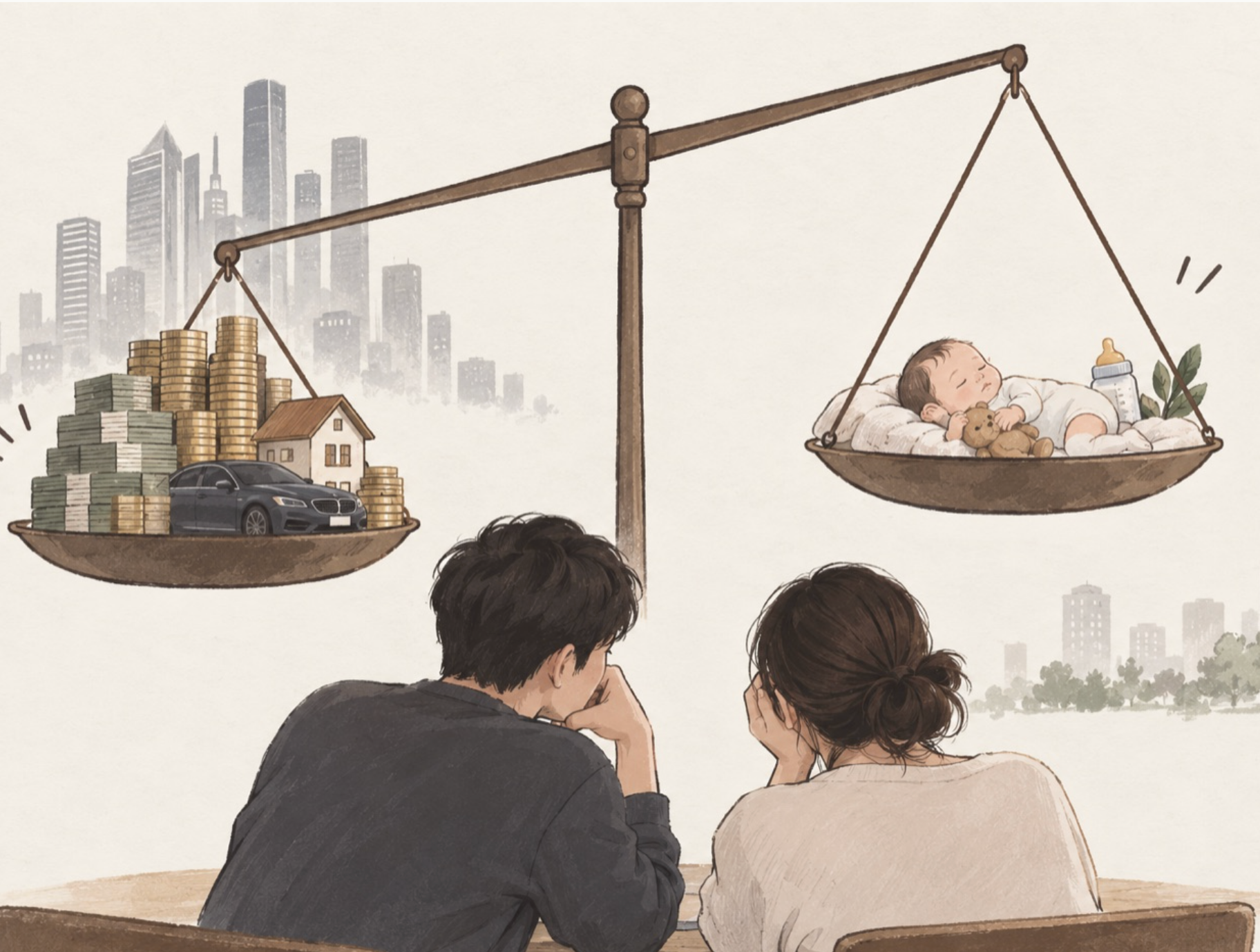
The Purse and Cradle
From an undergraduate thesis to acceptance: a year of learning, five rounds of revision, and the encouragement that made it possible.
01 / The journey
Publication Timeline
The project began.
Manuscript finalized and submitted.
First revision requested.
First revised manuscript submitted.
Second revision requested.
Second revised manuscript submitted.
Third revision requested.
Third revised manuscript submitted.
Fourth revision requested (editorial board review).
Fourth revised manuscript submitted.
Fifth revision requested (final review by the editor-in-chief).
Fifth revised manuscript submitted.
Accepted.
02 / Learning along the way
What This Journey Taught Me
Taking ownership
This paper was my undergraduate thesis, and it also brought an earlier chapter of my life to a close before classes began in September. Although the study grew out of my supervisor’s research project, turning an idea in a project proposal into a study that could actually be carried out was an invaluable learning opportunity for a relatively inexperienced undergraduate.
On our previous paper, Prof. Cheng had guided me step by step through the project. This time, because it was my own thesis, I had to take ownership. In that sense, it was the first time I had carried an entire project through myself. I came to appreciate just how many details require attention when leading a research project, and how important it is to keep track of its progress.
Writing the Introduction and Discussion
For my previous paper with Prof. Cheng, I wrote the Introduction, while he wrote the Discussion. Before this project, I therefore had no experience writing a Discussion section. This paper gave me another opportunity to learn, and helped me build foundational experience in writing both the Introduction and the Discussion.
Expanding my methodological toolkit
Through this thesis, I went from knowing only SPSS and Mplus to taking my first tentative steps into Python, R, and Stata—a real step forward in my research skills.
While working on awe-related research, I had often read papers from Jiang’s research group. Their articles in the Journal of Personality and Social Psychology (JPSP) frequently used large-scale data analysis. My motivation at the time was simple: I wanted to try those methods too. Methods such as text analysis also seemed particularly well suited to fertility, a topic widely discussed on social media. I had not expected that I would actually be able to make it work.
There were plenty of obstacles at the beginning. For example, only the first 50 pages of public Weibo posts could be retrieved: how could I access discussions beyond those pages and obtain more data? But I worked through the obstacles one by one. I am grateful to live in a time when the internet makes it possible to seek help from people with computing expertise, and when AI is also available to help.
Finding a clearer story
I became better at framing a paper and telling its story. With Prof. Cheng’s guidance, I gradually learned to spot and think through gaps in my reasoning, as well as places where the writing could be improved.
Becoming more peaceful
I also feel that I have become more “peaceful”, especially after several rounds of discussion and disagreement with reviewers. That change has carried over into everyday life: when difficulties or problems arise, I am less emotionally unsettled than before. My approach is simple: when a problem arises, work through it.
03 / People who make a difference
With Gratitude
I am grateful to Prof. Cheng for making me feel encouraged throughout this research project.
When I faced difficult reviewer comments, he would discuss them with me and offer guidance and a sense of direction.
Even after I had “graduated,” he continued to support me. He remained willing to explore social realities and new ideas with me, point out possible gaps, and show me how I could do better.
With the untempered ambition of a young researcher, I would often tell him that I wanted to publish in JPSP or other top journals that still felt like a dream. Perhaps I did not fully appreciate the scale of those ambitions. Yet he never poured cold water on them. Instead, he would tell me that, if I kept going, I would one day be able to do influential research.
And when I began tying my sense of self-worth to publication in so-called top journals and losing perspective, he helped me find my way back, reminding me that research is not everything.
Hong Wang’s words in an interview resonated with me: I, too, feel very fortunate to have found a mentor like this. As a student, all I can offer in return is a grateful heart.
Written on